
How to Build a Home Apothecary You’ll Actually Use
- tmavraides
- 7 hours ago
- 5 min read
THE LINK TO THE PRINTABLE IS TOWARD THE BOTTOM OF THE PAGE IN RED.
There is something deeply reassuring about a shelf filled with things you know how to use.
A pleasant tea for a cold evening. An infused oil that can be turned into salve for dry, hardworking hands. A first aid kit stocked for the scrapes, splinters, bites, and minor mishaps that happen around a home and homestead. A comfort basket that is already prepared before someone in the family comes down sick.
That is what I mean when I talk about a home apothecary.
It is not a collection of miracle cures. It is not a substitute for a doctor, a prescription, or emergency care. It is a practical household system built around comfort, readiness, useful skills, and thoughtful care.
Welcome to The Homestead Apothecary, a free step-by-step class series where we will build that system together.
A Shelf That Earns Its Place
I have been building and using my home apothecary for about fifteen years.
During that time, I have tried herbs that sounded wonderful but tasted so dreadful that no one wanted to use them. I have made projects that were beautiful but not useful enough to justify making a second batch. I have also discovered simple preparations that became dependable household staples.
What remains on my shelf has earned its place.
That is the standard we will use throughout this class series. The goal is not to create an impressive wall of matching jars. The goal is to build a home apothecary filled with things your household understands, trusts, and actually uses.
What a Home Apothecary Really Is
A practical home apothecary includes more than dried herbs and handmade salves.
It may include:
Pleasant herbal teas
Infused oils
Salves and balms
Everyday body care
Basic first aid supplies
Household comfort kits
Important emergency information
Soap and practical homemade cleaners
Unscented beeswax candles
Clear labels and instruction cards
A binder that keeps everything organized
Some of these things will be handmade. Others will be ordinary supplies that should always be easy to find.
Knowing when to make something yourself and when to rely on a trusted commercial product is part of building a responsible home apothecary.
What It Is Not
Clear boundaries are one of the most important parts of good household care.
A home apothecary is not a replacement for doctors, therapists, prescriptions, vaccines, professional diagnosis, urgent care, or emergency care.
A warm cup of tea can offer comfort, hydration, warmth, and a familiar household ritual. It should never be asked to carry the weight of a medical diagnosis.
Throughout this series, I will explain what each preparation is intended to do in an ordinary household, how it should be stored, and where its limits belong. Homemade comfort care and medical care can exist beside one another without pretending they serve the same purpose.
Accuracy is one of the ways we care for people well.
Begin Smaller Than You Think
You do not need fifty unfamiliar herbs, a dozen carrier oils, or an enormous shopping trip to begin.
In fact, beginning with too many ingredients often creates an expensive shelf of things you do not yet understand or know how to use.
We are going to start with a small collection of ingredients that can serve more than one purpose.
One properly prepared infused oil may become a salve, lip balm, body oil, or cuticle treatment. A few pleasant herbs can become tea blends your family chooses to drink. A digital scale, clean tools, careful labels, and good storage habits will carry you much further than a large collection of ingredients you cannot identify.
We will add to the shelf gradually, as each new skill gives us a reason to bring in something new.
What We Will Build Together
The Homestead Apothecary is organized as a practical class series, with each lesson building on the skills we learned before it.
Together, we will cover:
Foundations
We will begin with clean preparation methods, accurate measurements, complete labels, storage, shelf life, and the safety habits that apply to everything else we make.
The Tea Shelf
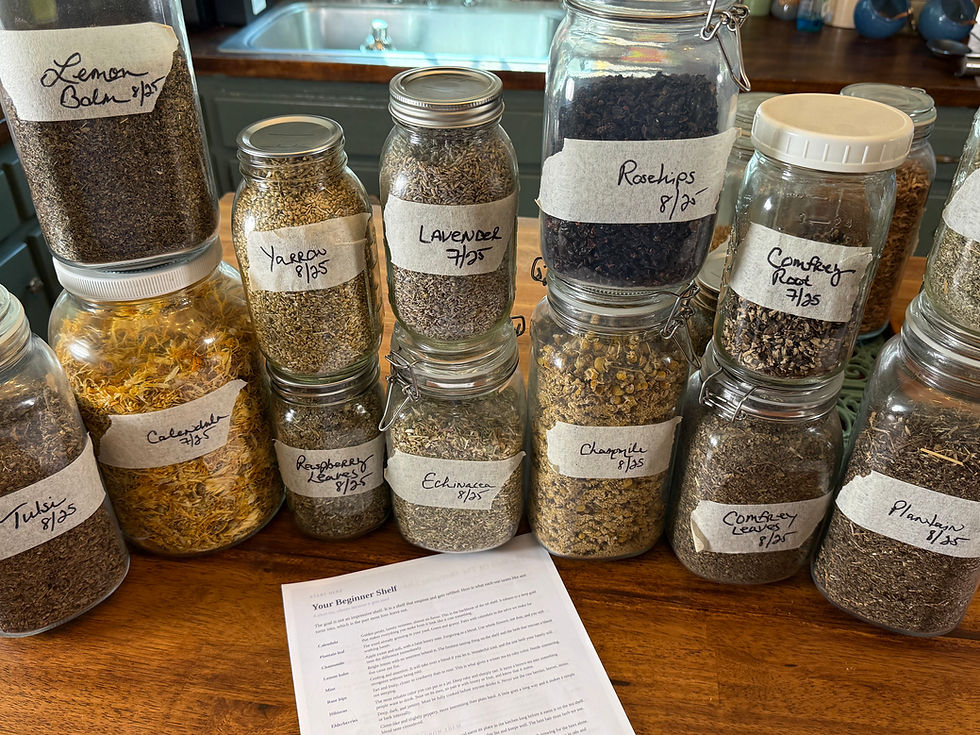
We will build a small collection of useful herbs and learn how to create pleasant tea blends that taste good enough to become part of everyday life.
Infused Oils and Body Care
We will learn how to prepare a foundational infused oil and turn it into several practical products, including salves, balms, and simple body care.
First Aid and Household Comfort
We will organize basic first aid supplies and assemble comfort kits for the ordinary illnesses and minor mishaps that happen in a busy household.
Home Care and Atmosphere
We will make practical household products, including soap, honestly labeled homemade cleaners, and unscented beeswax candles.
Organization, Gifting, and Growing
We will create a system for maintaining the apothecary, keeping useful records, preparing thoughtful handmade gifts, and deciding which skills are worth learning next.
The Habits That Keep an Apothecary Safe
The least glamorous parts of a home apothecary are often the most important.
Every preparation should be labeled with:
The name of the preparation
A complete list of ingredients
The date it was made
Its intended household use
Storage instructions
Any cautions that apply
Label the jar before you walk away from it. Every unlabeled jar eventually becomes a mystery jar, and mystery jars should be thrown away.
Clean tools, dry ingredients, proper storage, and honest decisions about spoilage are not fussy extras. They are part of the skill.
We will also consider allergies, pregnancy and breastfeeding, age, existing health conditions, and possible medication interactions before using herbs or sharing preparations with anyone else.
Your First Assignment Requires No Herbs
Before buying a single ingredient, begin with the information people often forget until they need it urgently.
Create a household emergency information page that includes:
The Poison Control number
Your doctor’s contact information
The nearest urgent care
The nearest emergency room
Known allergies for each household member
The date of each person’s last tetanus booster
The location of saline and clean dressings
Emergency contact information
Place the completed page where everyone in the household can find it quickly.
Readiness belongs in a practical home apothecary, and it is a far better place to begin than filling a shopping cart with herbs.
Download the Free Class Printable
I created a free printable to accompany this introductory class.
It includes the complete course map, a practical beginner shelf, basic equipment and supplies, labeling guidance, important safety considerations, and a household-readiness worksheet.
You do not need to build your entire home apothecary in a weekend. We are going to build it gradually, learning how to use each ingredient and make each preparation before adding more.
One useful skill. One well-labeled jar. One well-cared-for household at a time.
Important Note
This class series is intended for household education, comfort, organization, and readiness. It does not provide medical advice or replace doctors, therapists, prescriptions, vaccines, professional diagnosis, urgent care, or emergency care.
Always consider allergies, age, pregnancy and breastfeeding, health conditions, and possible medication interactions before using herbs or sharing preparations with anyone else. When you are uncertain, consult a qualified healthcare professional.


Comments