
How to Make a Ginger Bug (and What to Do When It’s Alive)
- tmavraides
- Apr 4
- 2 min read
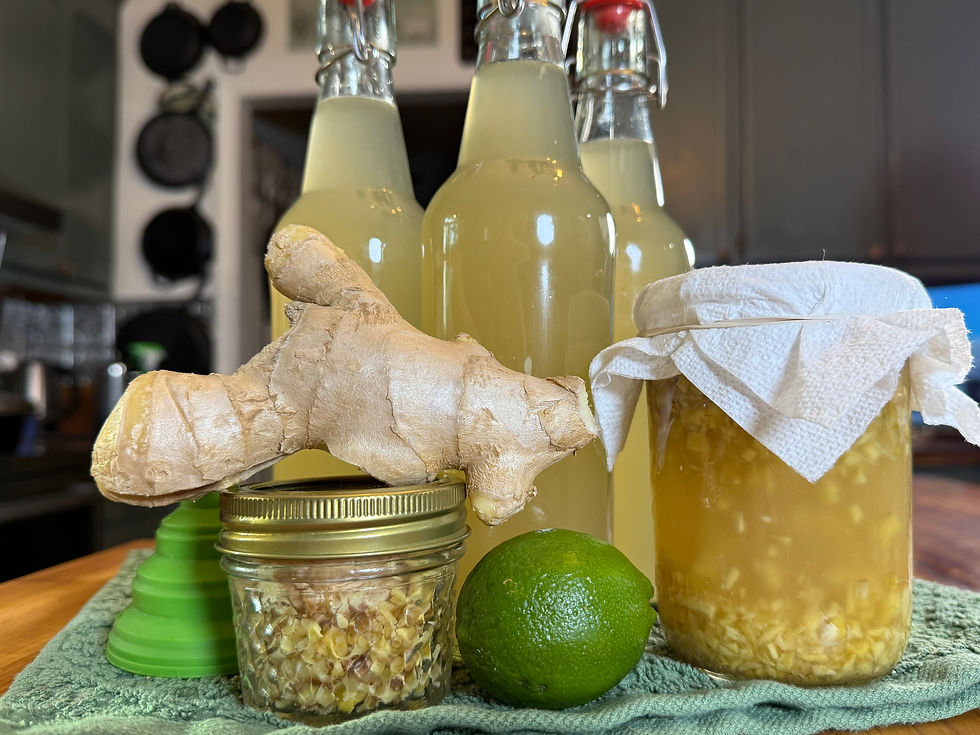
Fermented Beverages Series | EPISODE 1
There are a handful of things I like to keep going quietly in the background of the kitchen.
A pot of stock.
A jar of something fermenting.
A dough resting somewhere it’s not being bothered.
This—this is one of those.
A ginger bug is a simple culture made from fresh ginger, sugar, and water. Left alone and fed daily, it comes to life on its own and becomes the foundation for naturally fermented drinks like ginger ale and fruit sodas.
We started this one about 10 days ago.
And now it’s alive.
What Is a Ginger Bug?
A ginger bug is a wild fermentation starter.
It captures:
natural yeast from the ginger
beneficial bacteria from the environment
And turns that into a living culture you can use to ferment beverages.
If you’ve ever worked with sourdough, this will feel familiar.
What You Need to Get Started
Fresh ginger (organic, unpeeled)
Sugar (plain cane sugar works well)
Water
A clean glass jar
That’s it.
No packets. No special ingredients.
How to Make a Ginger Bug
Day 1
Add to your jar:
3 tablespoons finely chopped or grated ginger
3 tablespoons sugar
1 cup (8 oz) water
Stir well and cover loosely.
Days 2–7+ (Daily Feeding)
Each day, add:
1 tablespoon ginger
1 tablespoon sugar
Stir and leave at room temperature.
What to Expect (Real Timeline)
First few days
It will look like nothing is happening.
This is normal.
Around days 3–5
You’ll start to see:
small bubbles
slight movement in the jar
a shift in smell
Around days 5–10
You should see:
visible bubbling
light fizz when stirred
a fresh, slightly tangy smell
At this point: it’s alive
How to Know It’s Ready
Your ginger bug is ready when:
it bubbles consistently
it reacts within a few hours of feeding
it smells clean and active (not sour or off)
What to Do Next
Once your ginger bug is active, you can use it to begin fermenting drinks.
That’s where this really becomes useful.
From here, we move into:
ginger ale
lemon ginger soda
fruit-based fermented drinks
This is the foundation for all of them.
A Few Important Notes
Do not add your ginger bug to warm liquid
→ heat will kill the culture
Do not seal it airtight while building the starter
→ it needs to breathe
Use organic ginger if possible
→ the natural yeast lives on the skin
Why This Matters
This isn’t just about making a drink.
It’s about adding a small system to your kitchen that keeps working for you.
Once it’s going:
you can make soda anytime
you control the ingredients
you’re not relying on store-bought versions
It becomes part of how your kitchen runs.


I Just love you & your channel. And your recipes are right on point. No one can pay to miss any of your shows. Am I'm doing all your recipes. I feel healthy just talking about this.
Thank you,
I did start this starter over a year ago, it is in the fridge. I forgot about it. Do I discard it and start all over again or start refeeding it.. please help.
I truly enjoy listening and tagging along with you.
God bless You.